



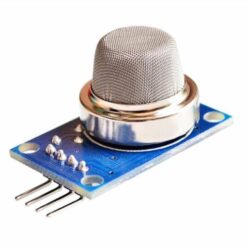

What It Does
-
Detects air pollutants and gases such as ammonia (NH₃), nitrogen oxides (NOx), alcohol, benzene, smoke, carbon dioxide (CO₂) and other volatile organic compounds (VOCs).
-
Outputs signals that indicate gas concentration and pollution levels, helping microcontrollers decide when air gets “bad.”
Key Features
-
Dual Output
-
Analog Output (AO): gives a variable voltage (0–5 V) proportional to gas concentration — useful for measuring trends.
-
Digital Output (DO): goes HIGH or LOW when gas concentration crosses a set limit — useful for alarms or threshold triggers.
-
-
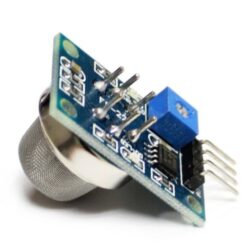
Adjustable Sensitivity: onboard potentiometer lets you set the trigger level for the digital output.
-
Fast Response: detects gas level changes quickly.
-
Compact and Easy to Use: standard 4-pin interface (VCC, GND, DO, AO) that fits breadboards and microcontroller shields.
-
Wide Detection Scope: reacts to multiple gas types rather than a single specific gas.
Technical Specs (Typical)
-
Operating Voltage: 5 V DC
-
Detection Range: Roughly 10–1000 ppm depending on the gas type
-
Outputs: Analog (continuous level) & Digital (threshold on/off)
-
Preheat Time: ~20 seconds before stable readings
-
Operating Temp: ~-10 °C to +50 °C
-
Interface: 4-pin header (VCC, GND, DO, AO)
Typical Uses
✔ Indoor air quality monitoring systems
✔ Smart home automation (ventilation control, alarms)
✔ IoT environmental sensing projects
✔ Educational and DIY electronics kits
✔ Air pollution detection in offices and labs
How It Works (Simple)
The MQ-135’s sensitive material (tin dioxide, SnO₂) changes resistance when exposed to certain gases. A small heater inside the sensor warms the material so its conductivity shifts based on pollutant levels. That change is converted into electrical signals you read with a microcontroller.
Be the first to review “MQ-135 Air Quality Sensor Module”
Related products

Reviews
There are no reviews yet.